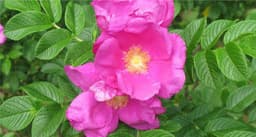
The Japanese Hamanasu rose (Rosa rugosa) is a wild species native to the coastlines and sandy shores of northeastern Asia — particularly Hokkaido in Japan, coastal China, and Korea. The name hamanasu (浜茄子) means roughly 'beach pear' in Japanese, a reference to the plant's coastal habitat and large, bright red rose hips. Unlike the cultivated roses of Grasse or Bulgaria, Rosa rugosa grows in exposed, windswept maritime conditions, which gives its flowers a particular freshness and resilience. The flower has been celebrated in Japanese poetry and art for centuries as a symbol of the wild northern coast.
Olfactorily, the Hamanasu rose is distinctly different from its more famous cousins. It is bright, clean, and fruity-rosy with a natural freshness that reflects its coastal origins — less honeyed and heavy than Damascus rose, less green than Grasse, and more reminiscent of fresh rose petals on salt-tinged sea air. There is a gentle fruitiness in its profile, recalling light red berries or fresh rose hip, that keeps it feeling lively and modern. It layers beautifully with aquatic notes, light musks, yuzu, and clean woods — a natural fit for Japanese-inspired minimalist compositions.
In perfumery, the Hamanasu rose is increasingly valued in niche and Japanese fragrance houses for its unaffected, natural character — a counterpoint to the opulence of classical rose absolutes. It suits fresh, airy, and coastal fragrance profiles with an elegant restraint. At Fragrenza, we embrace the unique character of this beautiful coastal rose in select fragrances in our dupe collection, bringing its fresh, seaside charm to accessible high-quality perfumes.